Kakugen 81 Japanese Chess Club

Japanese Chess Club

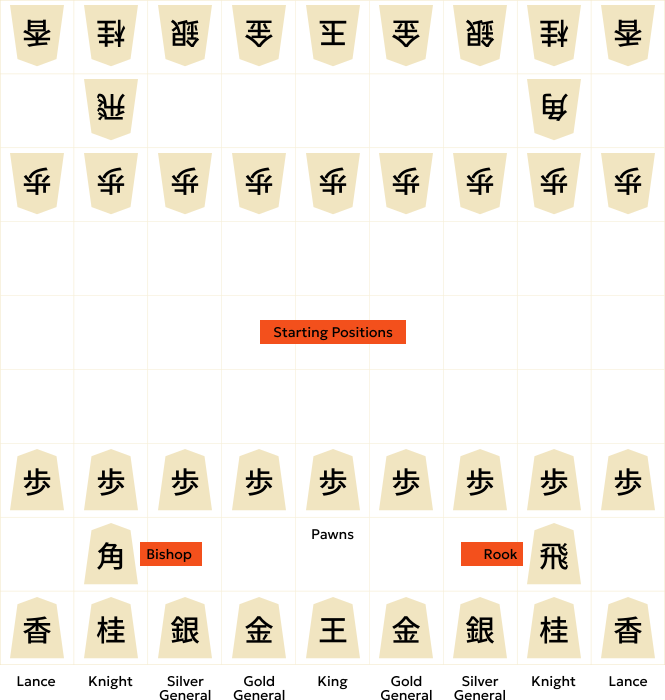
A shogi board showing the starting positions of all pieces
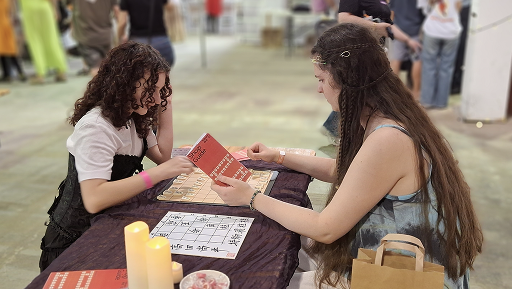
Two members of Dojo Kakugen 81 playing shogi together
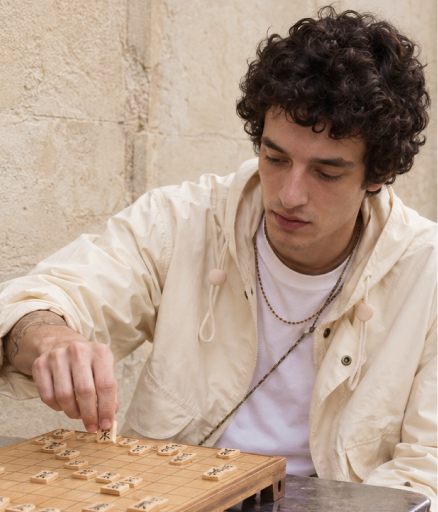
A shogi player studying the board

Dojo Kakugen 81

Dojo Kakugen 81 is the first shogi club in Cyprus. Here beginners can learn the rules, while experienced players can find new opponents.

Shogi, also known as Japanese chess, is part of Japanese culture and often appears in anime and manga.

Kakugen 81 will run online classes, in-person meet-ups, and tournaments. Anyone aged five or over can play.

Shogi develops concentration and strategic thinking.

To win, players need to think several moves ahead, adapt their strategy as the game unfolds and find creative solutions.

Welcome to the world of shogi!

Join the community on Discord (opens in a new tab)

Shogi Rules

The aim of shogi is to capture the opponent’s king.

Shogi Etiquette

At the start of the game, both players say Onegai shimasu, a polite expression roughly meaning ‘Please play a good game with me’.

When a player realises that they have lost, they say Makemashita, meaning ‘I have lost’.

At the end of the game, both players say Arigato gozaimashita, meaning ‘Thank you very much’, and bow to one another.

Setting Up the Game

  1. The senior player (the more experienced player) opens the box containing the shogi pieces.
  2. The senior player places their king on the board. After that the junior player places the other king. The players then take turns placing the remaining pieces.
    The first king piece
    The First KingOsho
    The second king piece
    The Second KingGyoku
  3. Once all the pieces have been set up correctly, the senior player returns any spare pieces back in the box.

Deciding Who Goes First

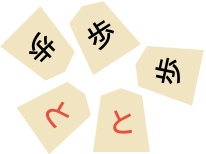
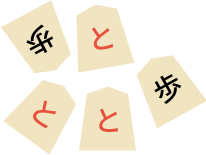
To decide who goes first, the senior player takes five pawns, shakes them in their hands and drops them onto the board or table.

Five tossed pawns with three or more face-up
If three or more face-up pawns are showing, the senior player goes first.
Five tossed pawns with three or more flipped
If three or more flipped pawns are showing, the junior player goes first.

Gameplay

Once the first player has been decided and both players have greeted each other, the game begins. Each type of piece moves differently (see ‘Piece Names and Movements’). The players then take turns, making one move at a time.

Shogi has four possible actions: moving a piece, promoting a piece, capturing an opponent’s piece, and dropping a captured piece.

The game continues until a player captures the opponent’s king or a draw occurs.

Piece Names and Movements

Piece movements: King moves one square in any direction; Gold General moves one square except diagonally backward; Rook moves along ranks and files; Bishop moves diagonally; Silver General moves forward and diagonally; Knight jumps two squares forward and one sideways; Lance moves forward; Pawn moves one square forward. Promoted Rook also moves one square diagonally; promoted Bishop also moves one square along ranks and files; other promoted pieces move as Gold General. King and Gold General cannot promote.
  • King

    Osho (Gyoku)

    Gold General

    Kin-sho

  • Rook

    Hisha

    Dragon

    Ryu

  • Bishop

    Kaku

    Dragon Horse

    Uma

  • Silver General

    Gin-sho

    Prom. Silv. General

    Nari-gin

  • Knight

    Kei

    Prom. Knight

    Nari-kei

  • Lance

    Kyosha

    Prom. Lance

    Nari-kyo

  • Pawn

    Fu

    Prom. Pawn

    Tokin

Promoting Pieces

Shogi pieces can be promoted by turning them over. The opponent’s camp is the promotion zone.

Three situations in which a player may promote a piece:

Three promotion cases: 1. Entering the promotion zone. 2. Moving within the promotion zone. 3. Moving out of the promotion zone. The opponent’s three ranks form the promotion zone.

Promotion is usually optional, so the player may choose whether or not to promote the piece. Once promoted, a piece cannot be flipped back. If it is captured, it returns to its original, unpromoted side before it can be dropped again.

However, a pawn or lance must be promoted when it reaches the furthest row (row 1). A knight must be promoted when it reaches either of the two furthest rows (rows 1–2).

Capturing Pieces

A player captures an opponent’s piece by moving one of their pieces to the square occupied by the opponent’s piece.

Captured pieces are called pieces in hand. They are kept on a small stand beside the board with their unpromoted side face up.

Dropping Pieces

Instead of moving a piece already on the board, a player may drop one of their pieces in hand onto an empty square.

Draws

The game ends in a draw if the same position is repeated four times, or each king has entered the opponent’s camp and neither player has a realistic chance of winning.

Illegal Moves

If a player makes one of these moves, they lose the game:

  • Dropping a pawn into a file that already contains another pawn belonging to the same player. A pawn and a promoted pawn may, however, occupy the same file.
  • Dropping or moving a piece to a square from which it would have no legal move.
  • Dropping a pawn if doing so would leave the opponent’s king under attack with no legal response.
  • Moving a piece in a way that is not permitted by its movement rules.
  • Playing out of turn.

Tidying Up

After the game, both players count all the pieces to make sure that none are missing and return them to the box.