Onegai shimasu
The start of the game
At the start of the game, both players say “Onegai shimasu”, a polite expression roughly meaning “Please play a good game with me”.
Shogi, also known as Japanese chess, is part of Japanese culture and often appears in anime and manga.
Kakugen 81 will run online classes, in-person meet-ups, and tournaments. Anyone aged five or over can play.
Shogi develops concentration and strategic thinking. To win, players need to think several moves ahead, adapt their strategy as the game unfolds, and find creative solutions.
Welcome to the world of shogi!
Shogi, or Japanese chess, originated in Japan around the 8th–11th centuries. It is believed to have developed from the Indian game chaturanga, which spread across Asia and gradually acquired local variations. The earliest surviving shogi pieces date from the 11th century.
Over time, the rules changed and different forms of the game emerged. The standard 9×9 board used today had become established by around the 16th century.
In the 20th century, the Japan Shogi Association was founded, and today the game is becoming increasingly popular in other countries. Shogi Day is celebrated in Japan every year on 17 November.
The start of the game
At the start of the game, both players say “Onegai shimasu”, a polite expression roughly meaning “Please play a good game with me”.
The moment of defeat
When a player realises that they have lost, they say “Makemashita”, meaning “I have lost”.
The end of the game
At the end of the game, both players say “Arigato gozaimashita”, meaning “Thank you very much”, and bow to one another.
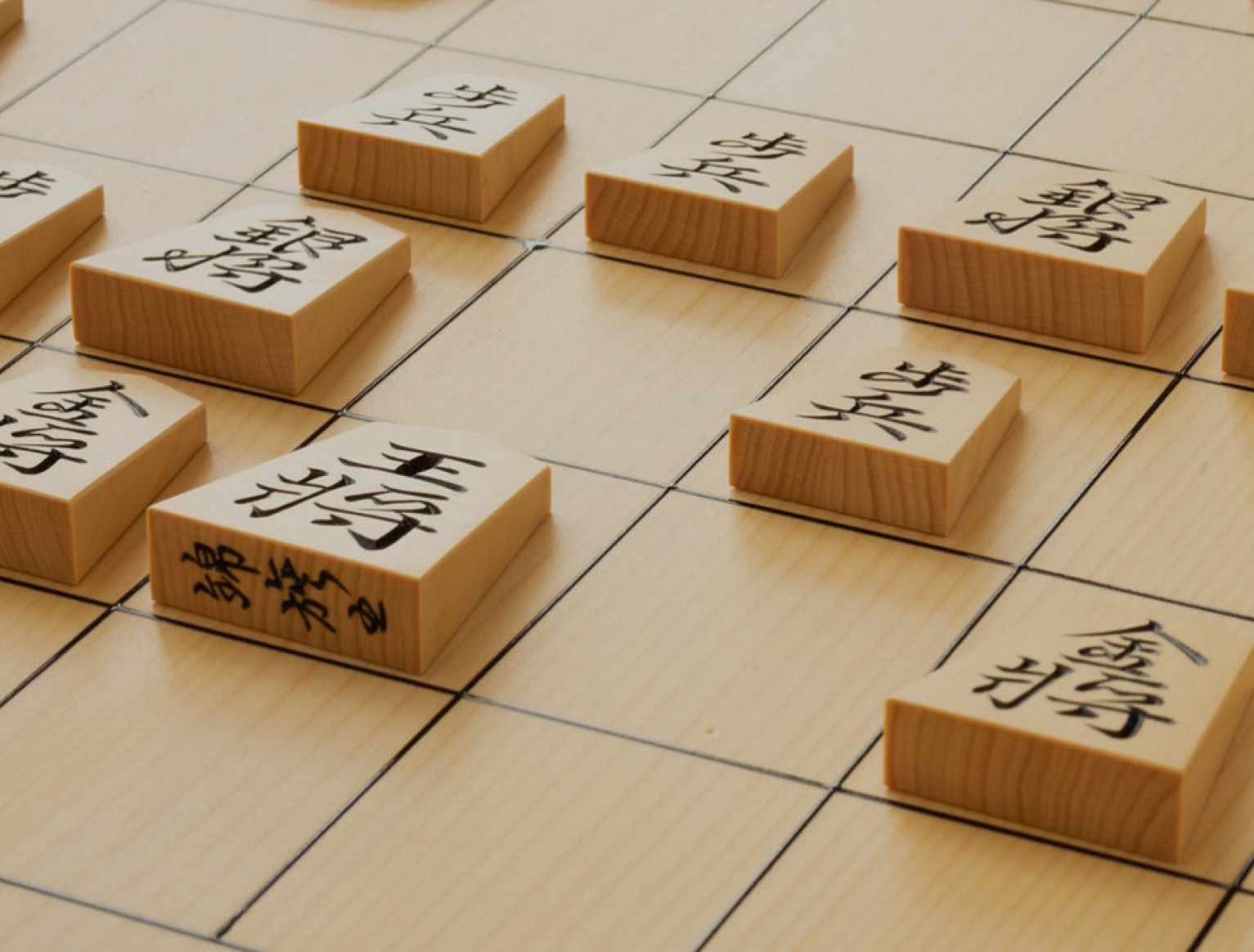
The senior player places their king (王) on the board. After that the junior player places the other king (玉).
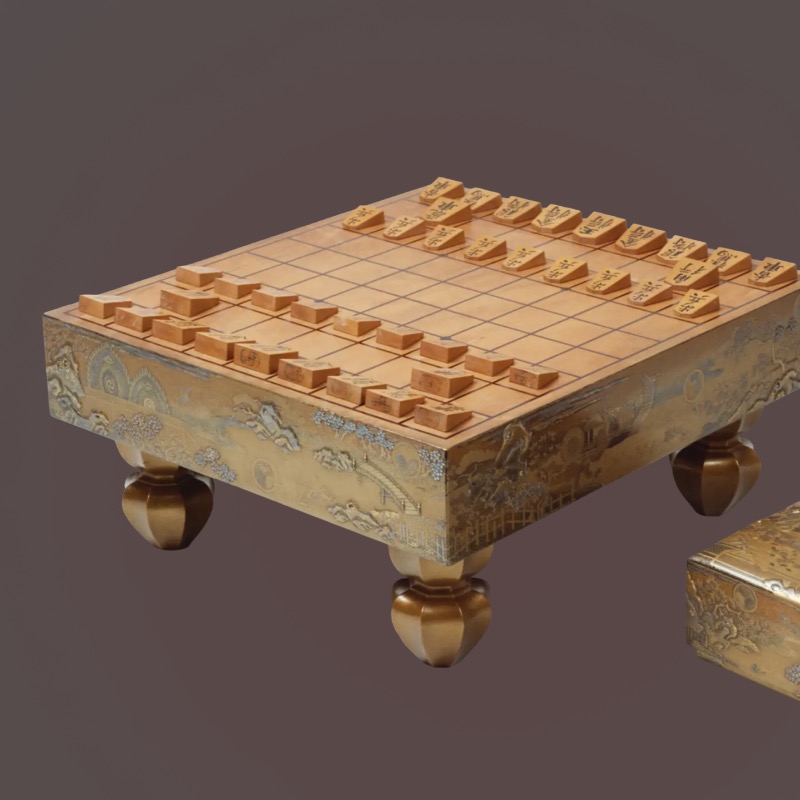
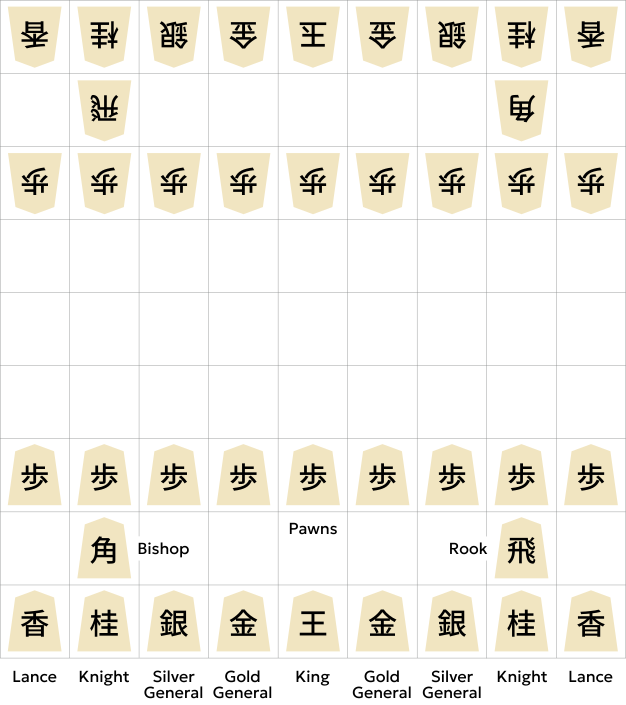
The senior player places their king on the board. After that the junior player places the other king. The players then take turns placing the remaining pieces.
Once all the pieces have been set up correctly, the senior player returns any spare pieces back in the box.
To decide who goes first, the senior player takes five pawns, shakes them in their hands, and drops them onto the board or table.

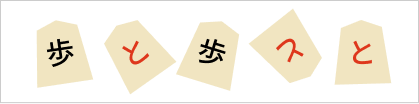
Once the first player has been decided and both players have greeted each other, the game begins. Each type of piece moves differently. The players then take turns, making one move at a time.
The game continues until a player captures the opponent’s king or a draw occurs.
Shogi has four possible actions: moving a piece, promoting a piece, capturing an opponent’s piece, and dropping a captured piece.
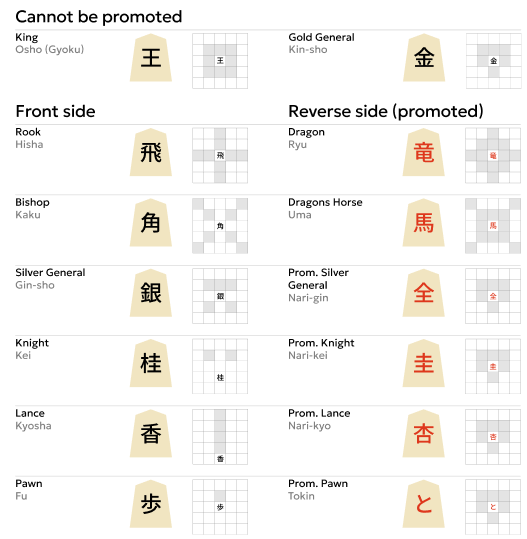
Shogi pieces can be promoted by turning them over when the opponent’s camp is the promotion zone.
Three situations in which a player may promote a piece.
Promotion is usually optional, so the player may choose not to promote a piece. Once promoted, a piece cannot be flipped back. If it is captured, it returns to its original, unpromoted side before it can be dropped again.
However, a pawn or lance must be promoted when it reaches the furthest row (row 1). A knight must be promoted when it reaches either of the two furthest rows (rows 1–2).
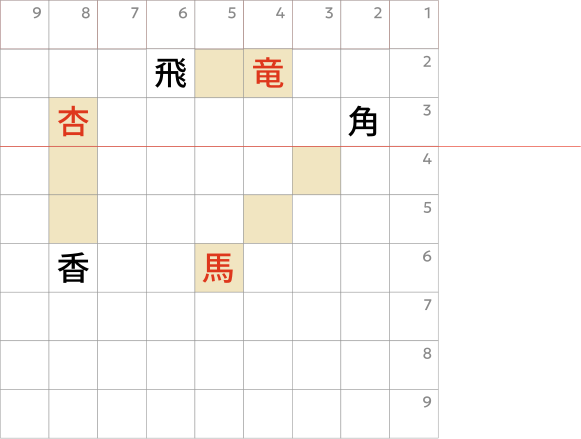
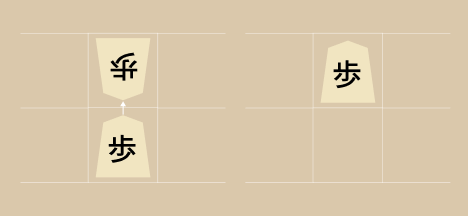
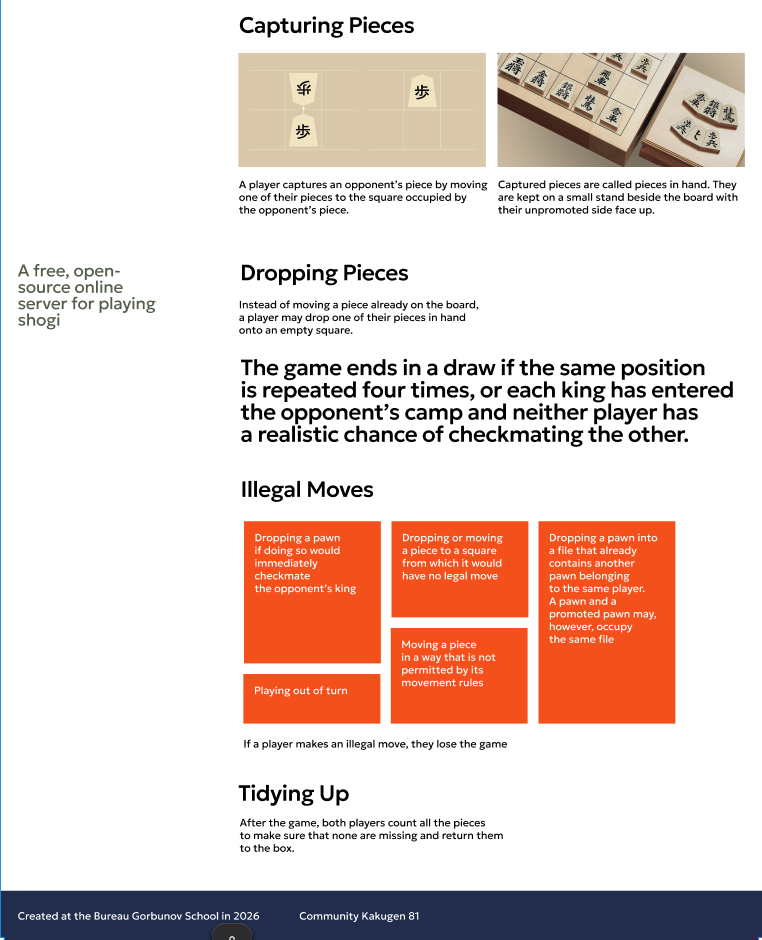
Instead of moving a piece already on the board, a player may drop one of their pieces in hand onto an empty square.
The game ends in a draw if the same position is repeated four times, or each king has entered the opponent’s camp and neither player has a realistic chance of checkmating the other.
Dropping a pawn (歩) if doing so would leave the opponent’s king (玉) under attack with no legal response.
Playing out of turn.
Dropping or moving a piece to a square from which it would have no legal move.
Moving a piece in a way that is not permitted by its movement rules.
Dropping a pawn into a file that already contains another pawn belonging to the same player. A pawn and a promoted pawn may, however, occupy the same file.
If a player makes an illegal move, they lose the game.